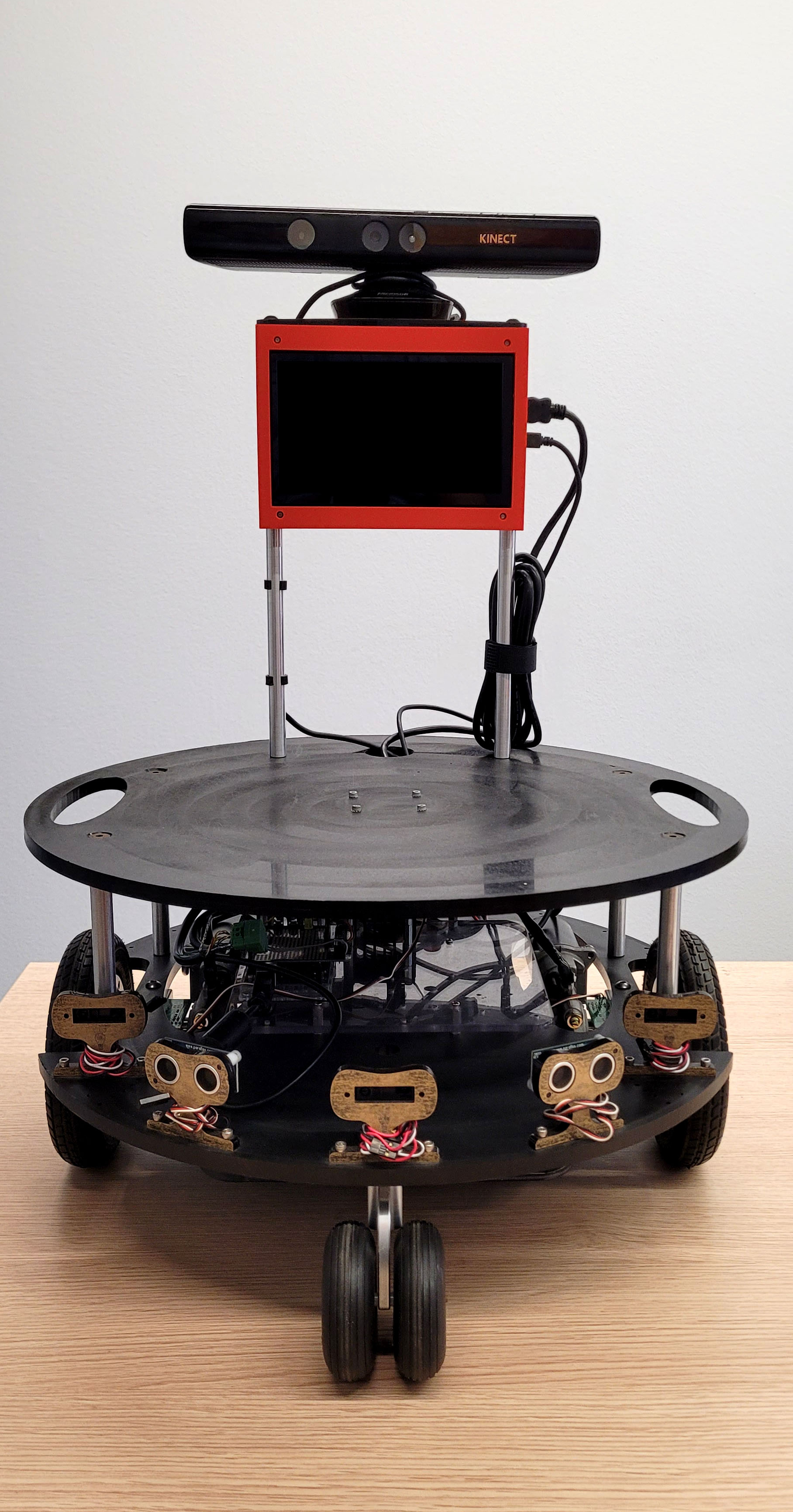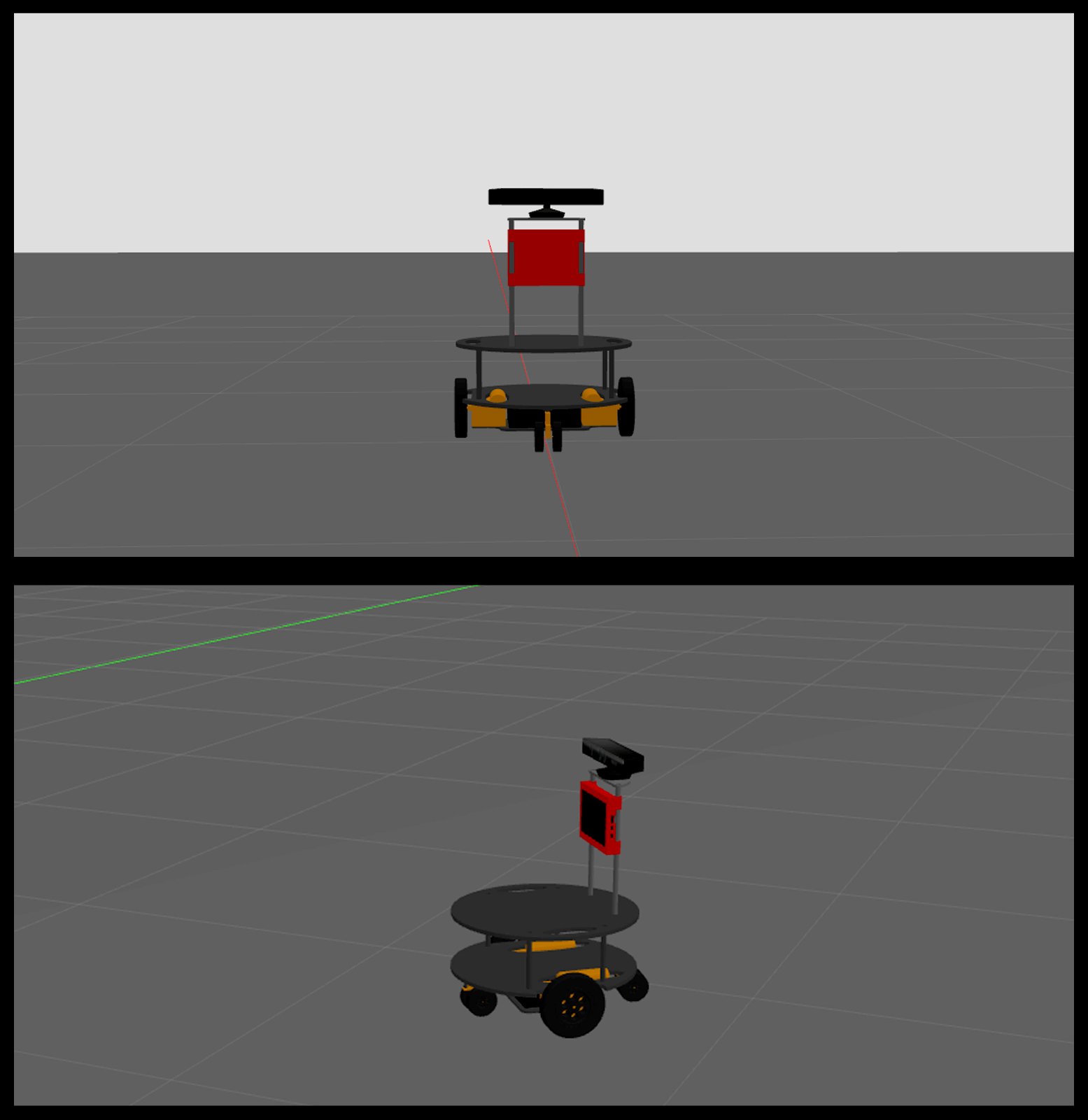
Final degree project focused on characterising and validating the behaviour of a mobile robot by creating its digital twin. Starting from the physical Eddie robot, the project develops a digital replica with enough fidelity to simulate its movement, adjust its behaviour and compare the model with the real system in a controlled environment.
The project was developed in several stages:
- Measuring the real robot and creating a CAD replica in SolidWorks as the geometric foundation of the model.
- Generating the URDF model, defining the physical structure of the robot, the relationships between its components and its kinematics within the ROS ecosystem.
- Integration and simulation in Gazebo, tuning the model parameters to approximate the behaviour of the physical robot.
- Incorporating Lidar and Kinect sensors into the digital twin to work on perception and navigation in simulation.
- Visualisation and debugging in RViz, checking states, reference frames and signals relevant to validating the system as a whole.
As a complementary part of the work, a 3D-printed enclosure or mount was also designed to integrate a screen into the real robot, making it easier to display information and interact with the robot in potential practical applications.
Project resources
- EddieBot project source code (GitHub)
- Video demonstration of the digital twin in operation
- Full final degree project report in PDF (Spanish)
Physical robot